Discover the secrets preserved for centuries among the rocks of the Rocca Due Teste Shelter and the landscapes of Alpicella. Our collection, recently renewed (2025–2026), is a tribute to the passion of Mario Fenoglio, a pioneer of local research.
- What you will see: Unique artefacts from archaeological excavations carried out between 1979 and 1987 at Fenestrelle (Rocca Due Teste) and Alpicella.
- Our tribute: A route dedicated to Mario Fenoglio, a passionate researcher and deep connoisseur of the area, who discovered the Rocca Due Teste site in 1977.
- A new look: Spaces completely redesigned between 2025 and 2026 to offer an immersive experience.
Opening hours: Friday, Saturday and Sunday | 10:00 am – 4:00 pm
Contact: esposizionearcheologica@comune.varazze.sv.it
You will be welcomed by a team of archaeologists and art historians from the Sabazia Section of the IISL, with the participation of the Association “Friends of the Archaeological Museum of Alpicella”, for an engaging and scientifically grounded experience.
A JOURNEY THROUGH HISTORY AND CREATIVITY: OUR WORKSHOPS
Combining learning and hands-on activities is at the heart of our workshops. Our staff organises educational experiences for schools and families designed to rediscover the history of the area. After an introductory theoretical session, participants become little prehistoric artisans, trying their hand at reproducing artefacts such as figurines and jewellery, using techniques and tools as close as possible to ancient ones. Guided tours can be adapted to all ages and school levels. Activities can be tailored for children with disabilities. The staff is also available to design or support customised educational programmes based on teachers’ or schools’ needs.
THE ROCCA DUE TESTE SHELTER
The earliest occupation of the Rocca Due Teste Shelter dates back to the later phase of the Neolithic period, known as the Middle Neolithic or Square-Mouthed Pottery Culture (VBQ), which began in Liguria around 4700 BC and lasted approximately one millennium. The numerous archaeological finds and the presence of an incomplete child burial—still the only example of its kind outside the Finalese and Albenganese (Val Pennavaira)—confirm the prolonged use of the shelter. In later periods, occupation appears to have declined, eventually ceasing around the Second Iron Age.


THE MEGALITHIC ROAD
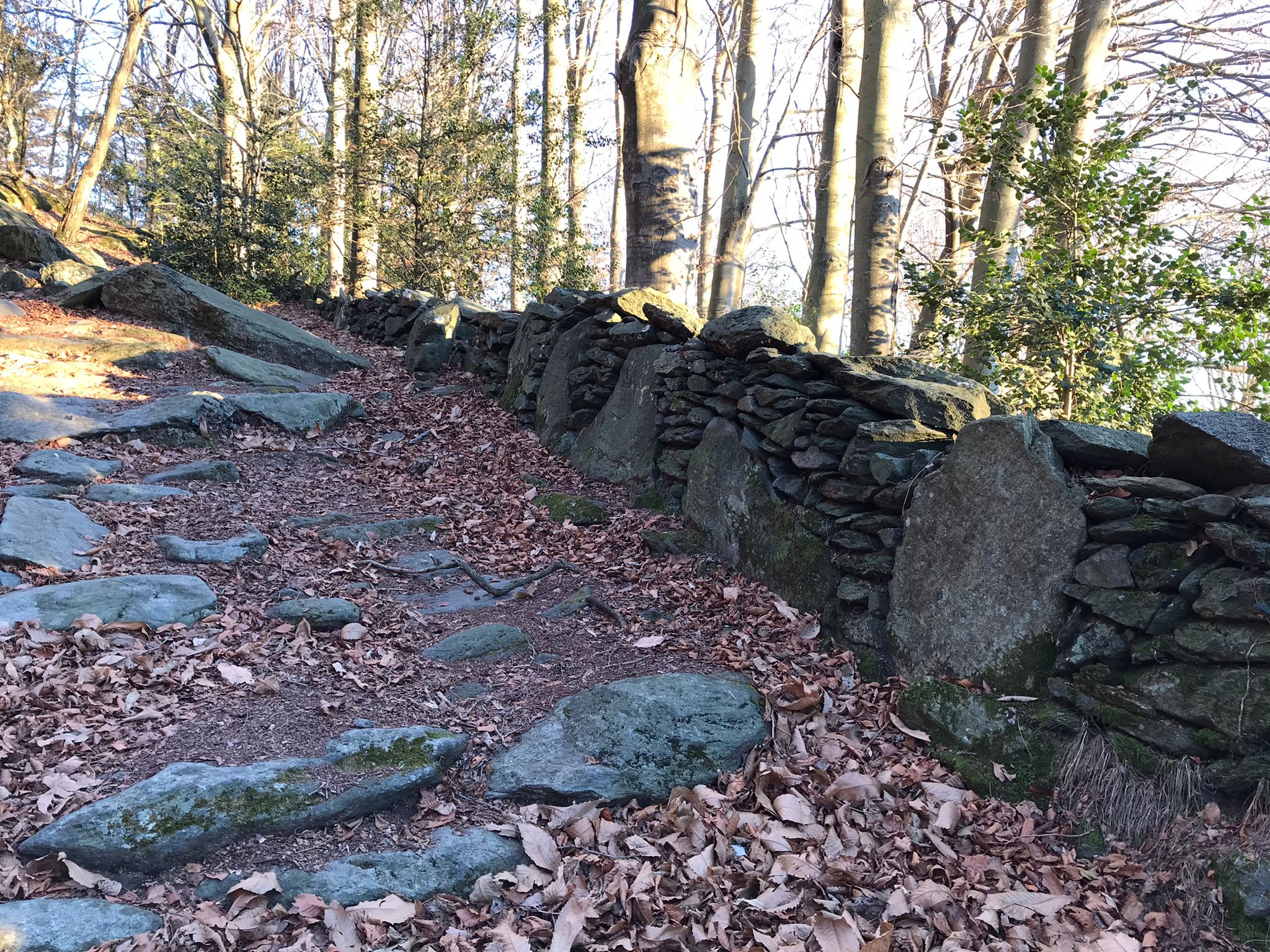
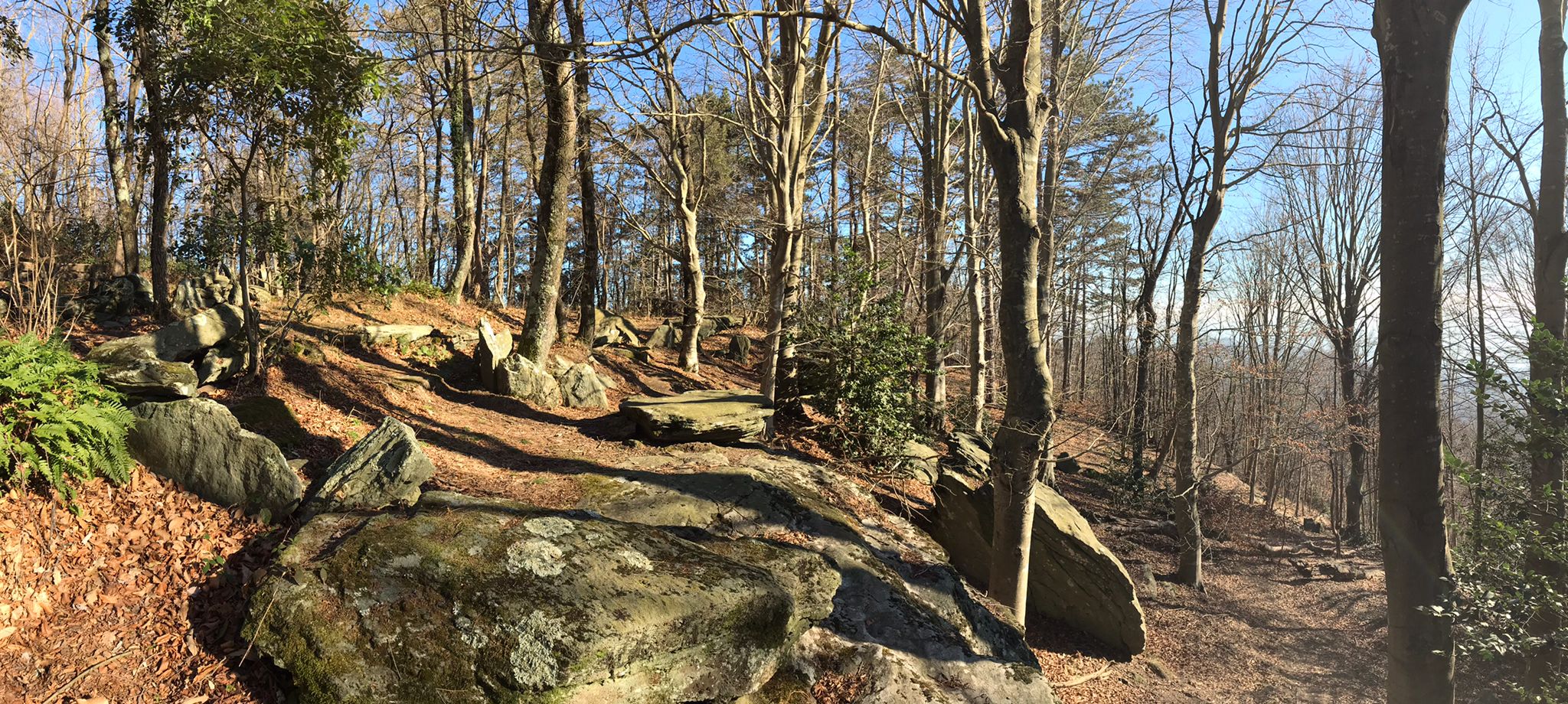
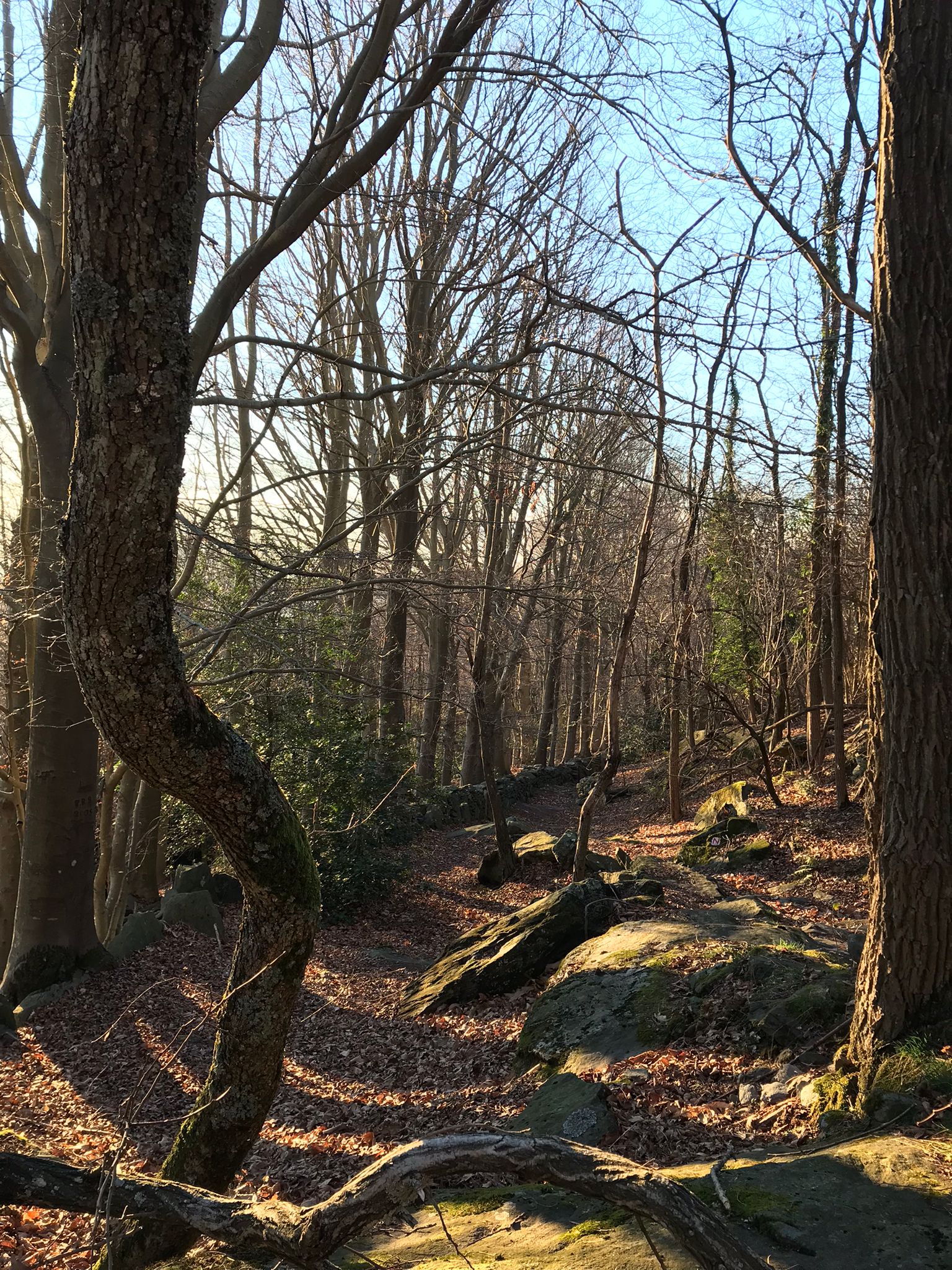
A forest path just beyond the centre of Alpicella leads to the so-called “megalithic road”, a paved stretch just over 100 metres long, bordered by a sequence of large vertically set stones connected by smaller ones. A stone enclosure of about 400 square metres, with a central boulder located at the end of one of the two branches of the “megalithic road”, is even more difficult to interpret. Lacking clear practical functions related to forestry or pastoral use, some scholars suggest a possible religious purpose, perhaps linked to the worship of natural elements such as the sun, water, or mountains.